
Diary of a Floral Buyer: Reflections from Kenya
By Helaine Gurgel
Buyer at Veevers Carter

There are some trips that change the way you see your work and, in a small but important way, the world around you. My recent visit to Kenya with Hoek Flowers was one of those.
It was a whirlwind of early mornings and long days, moving from one flower farm to the next, absorbing knowledge, stories, and perspectives that have already reshaped how I think about the flowers we choose at Veevers Carter and the people behind them.
We visited six incredible farms - PJ Flora, Red Land Roses, Marginpar, Beauty Line, Interplant, and Blooming Africa, each one distinct in its approach, but all united by a sense of care: for their craft, their people, and the land they depend on.
Day One: Powering Change with the Sun
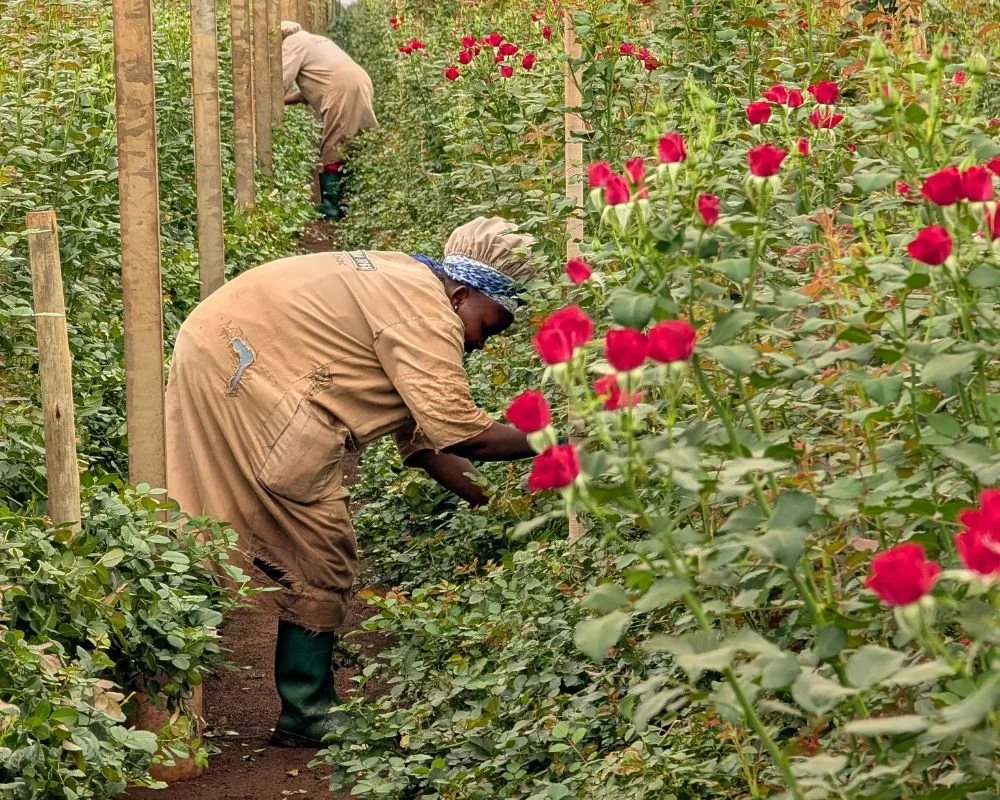
At PJ Dave Floral Farm, I was struck by how innovation and sustainability can go hand in hand. Rows of roses basked under the same sunlight that powers the entire operation thanks to an impressive solar energy system. What really stayed with me, though, was their approach to community: donating 10% of profits to build schools and employing over 1,200 local people.
They’re also proudly certified by both Fairtrade MPS and the Kenya Flower Council, recognition that goes beyond compliance to represent a real commitment to ethical practice and social impact.
It was a clear reminder that sustainability isn’t just environmental, it’s deeply human.
Day Two: Roses, Responsibility, and Respect
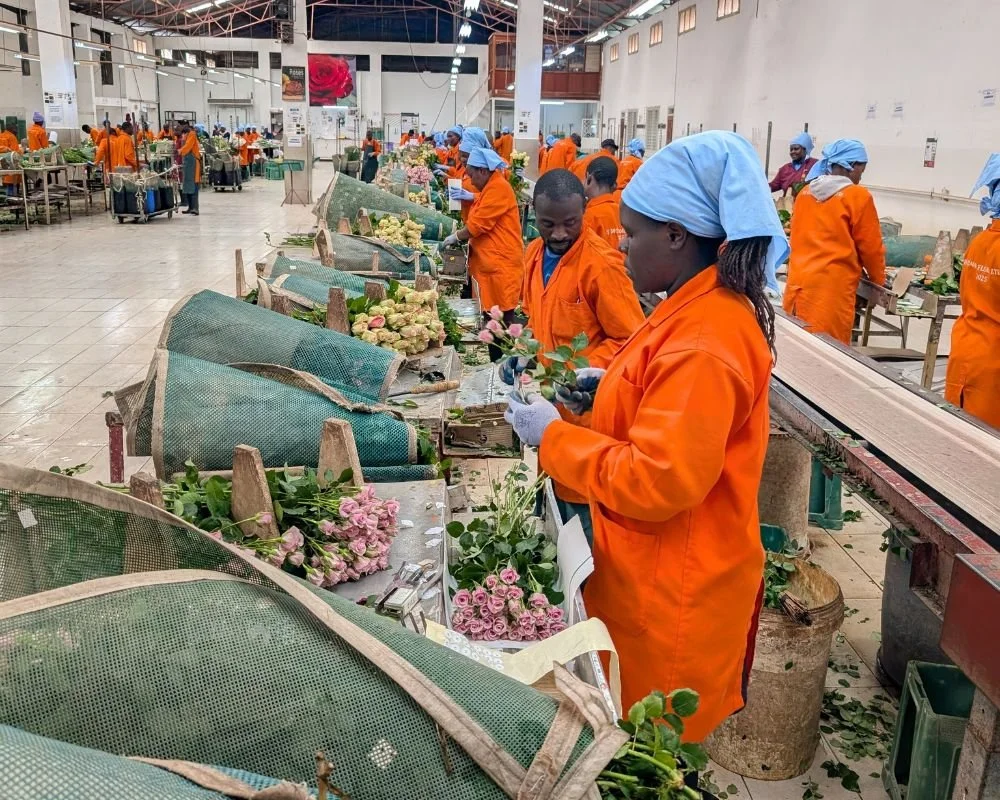
The drive along Thika Road to Red Land Roses took us through golden light and bustling towns. The farm itself is known for its exquisite spray and garden roses, but what stood out most was their ethics. Red Land is carbon-neutral, plastic-free, and committed to water recycling, but beyond the systems and certifications, you can feel the respect they have for their people.
The energy in their warehouse was infectious, laughter, teamwork, pride. You sense that the flowers carry that spirit with them, even as they travel across continents.
Day Three: Flowers That Tell a Bigger Story
At Marginpar, a sign at the gate read: “We grow our people, our people grow flowers.” It perfectly captured their philosophy. From phlox and Astrantia to clematis and eryngium, the farm is a tapestry of texture and colour but also a model of circular thinking. Composting, vermiculture, and solar energy are all part of daily life here.
Later, we watched the sun set over Lake Naivasha, a sky ablaze in orange and violet and I felt that quiet sense of connection between place, purpose, and product that’s so often invisible in our industry.


Day Four: Learning from the Land
At Interplant, a family-run rose breeder, sustainability was as much about respect for the natural cycle as it was about innovation. Their composting system, turning rose waste and chicken manure into organic fertiliser and their 11-stage wetland water filtration process were nothing short of inspiring.
It takes 28 days for their water to complete the purification cycle, a quiet, natural rhythm that reminded me how much patience and time go into every bloom we work with back in London.
Day Five: The Human Side of Beauty
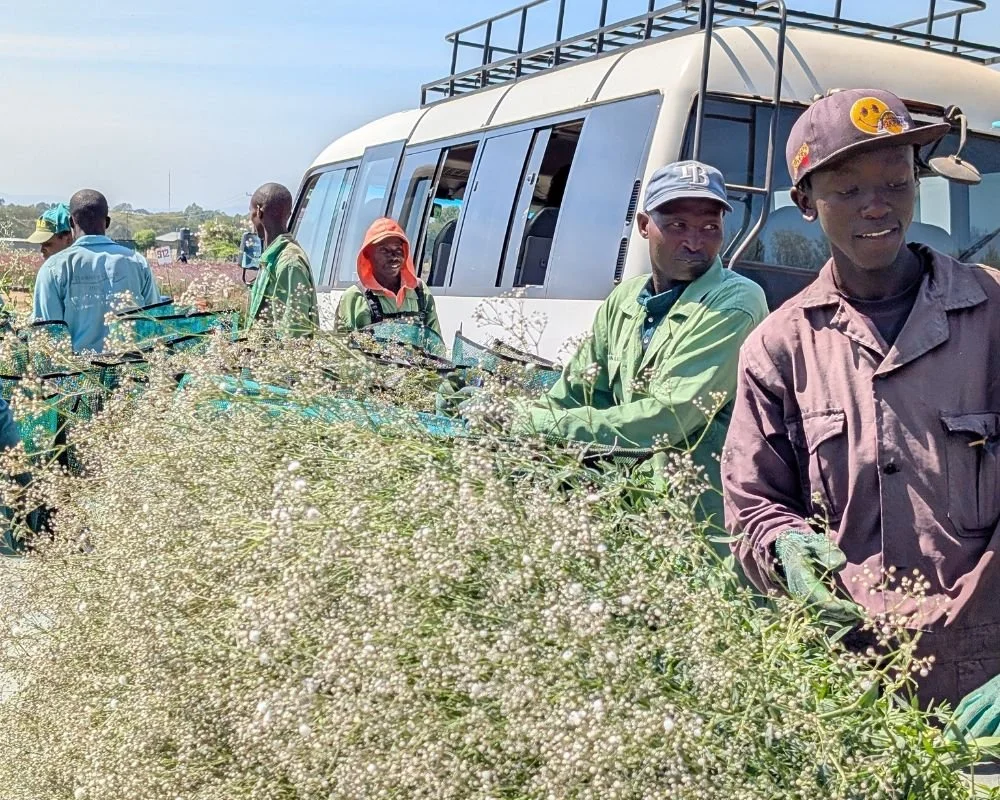
Blooming Africa, our final stop, specialises in delphiniums, hydrangeas, and Limonium, flowers that always bring drama and texture to our designs. But beyond their visual beauty, what resonated most was the company’s investment in people: providing medical care, clean water, and food security for their staff and surrounding community.
There’s still work to be done, particularly around reducing agrochemical use, but the sense of purpose is unmistakable. Change is happening, one decision at a time.
Beyond the Farms: A Broader Perspective
Back in Nairobi, we met the team at Hoek, whose logistics and supply network keep these farms connected to the rest of the world. Their presentations from the Kenya Flower Council and the Kenya Plastic Pact were both sobering and inspiring, a glimpse into the collective effort being made to build a more sustainable future for floriculture.
Later that evening, at the Tambuzi Soirée, I was delighted to discover that Tambuzi, whose roses we already use through our supplier in Holland, is a certified B Corp. Their approach embodies transparency, ethical practice, and long-term thinking, principles that echo so strongly with our own values at Veevers Carter.

What I Took Home
Leaving Kenya, I felt a renewed sense of responsibility and gratitude. The flowers we select are not just products of the earth; they’re the result of countless hands, stories, and choices that shape them long before they reach our studio.
This journey reminded me that sustainability isn’t a checklist, it’s a conversation. It’s built on relationships, curiosity, and the willingness to learn and adapt.
I came home inspired by what I saw, from solar panels and water recycling systems to the laughter of workers in the fields. But more than anything, I came home inspired by the people: their care, their resilience, and their belief in growth, not just of flowers, but of futures.
With sincere thanks to the exceptional team at Hoek Flowers and the extraordinary Kenyan flower farms that made this journey unforgettable.